Supporting LGBTQ+ Creators Behind the Camera
&FRIENDS speaks to Alice Blanc, founder of trans/non-binary platform Trans+ On Screen alongside producer/director Sophia Shek about their feelings on progress in the industry. The importance of representation in the media is now more prevalent and more discussed than ever. In the past few years we’ve finally seen more minorities given a bigger space […]
&FRIENDS Launches Industry-Disrupting Talent Management and Content Production Platform
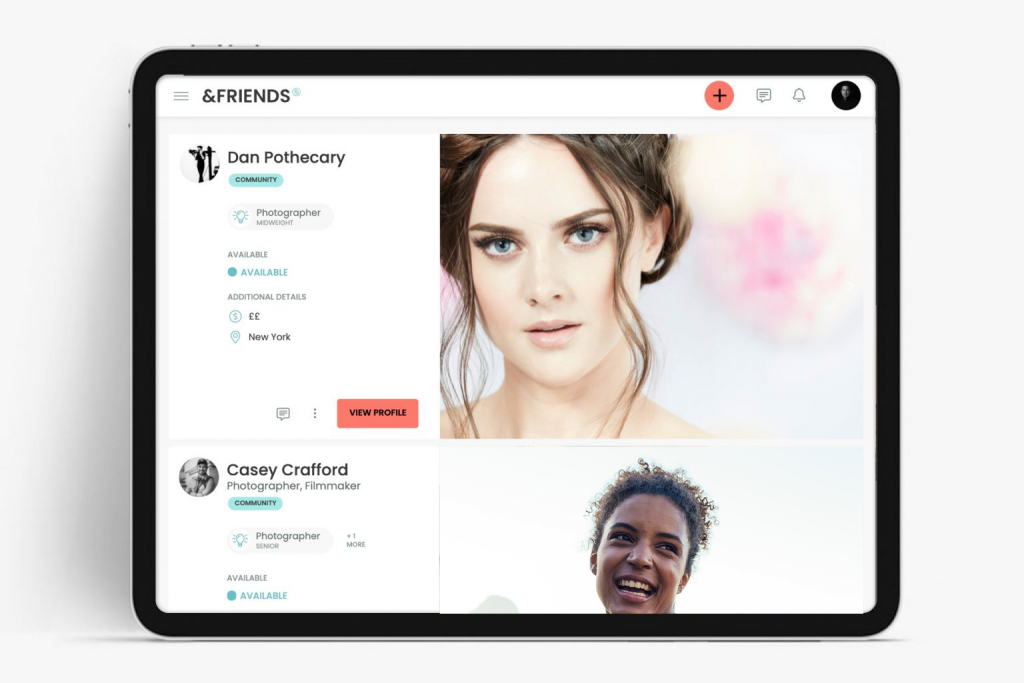
Global content production and technology powerhouse &FRIENDS today announces the roll-out of its end-to-end Talent Management Platform, allowing agencies and businesses to tap into an international community of world-class makers and experts – and create on-the-ground specialist production teams in any market, while also blending their existing talent pools and in-house resources – all in
&FRIENDS Launches Industry-Disrupting Talent Management and Content Production Platform Read More »
Cavalry + &FRIENDS team up to create the future of talent management and global content creation
Cavalry Freelancing, APAC’s leading talent platform for advertising and digital professionals, today announced a merger and rebrand in the next stage of its evolution. The Sydney-based platform has merged with global content production and technology powerhouse &FRIENDS, heralding a new era in creative talent management and content production. In contrast to other industry platform players,
Travel Brands, Hope is on The Horizon – But Don’t Miss The Post-Pandemic Wave
Written by Matt Carroll Travel brands are caught between a rock and a hard place right now. Battered by the global ‘shut-down’ that’s left holes in balance sheets, while simultaneously facing consumer demand on an unprecedented scale. So how are you going to market to people, when you can’t afford to market? Answer: find a
Travel Brands, Hope is on The Horizon – But Don’t Miss The Post-Pandemic Wave Read More »
Written by Matt Carroll
Travel brands are caught between a rock and a hard place right now. Battered by the global ‘shut-down’ that’s left holes in balance sheets, while simultaneously facing consumer demand on an unprecedented scale. So how are you going to market to people, when you can’t afford to market?
Answer: find a smarter way…
As a travel journalist ‘in my bones’ – having spent two decades writing for outlets including Nat Geo Traveller, The Independent and others – it’s been tough witnessing the onslaught the industry has suffered during the pandemic. But there are undeniable signs of hope on the horizon. Over 50% of UK citizens have now been vaccinated, overseas travel is slated to recommence on May 17th and EU proposals are underway for vaccine passports. Combined with this, are reports from economists that record-level savings are ready to be unleashed by house-bound consumers desperate to escape. The dam is ready to burst.

With the post-pandemic mist now beginning to clear, it’s time to start focusing on forthcoming consumer demand
But the question I hear repeatedly from travel clients and colleagues – the billion-pound question – is how do we tap into this pent-up demand when our marketing budgets have been crushed?
What’s more, constantly-shifting travel bans mean that consumer demand for destinations is changing from month to month – so you need to be more reactive than ever before with the content you’re putting out.
Put simply, you can’t afford to spend months planning campaigns that may be out of date by the time they’re signed off. Then there’s the challenge of flying crews and creators out to locations, in a world that’s rigged with travel bans, quarantine rules and other tripwires.
Nevertheless, some operators are reporting bookings spikes of 500% since the start of this year, so how are you going to ensure you don’t miss out?

Picture the scene – with a global network of friends in all the right places, you can have crews of makers turning round campaigns in a matter of weeks…
How to harness the post-pandemic uplift
Despite all the change and upheaval we’ve experienced over the last 12-plus months, one thing has remained constant. We as consumers still dream of escape, and are desperate to engage with content that fuels those dreams. What’s more, millions of us are now poised with our fingers over the ‘Book’ button – a well-timed video or Insta’ post being all it takes to tip the balance.
Pre-pandemic, campaigns were planned months in advance. Now the key lies in being able to generate a strategy, nail down the creative and get assets shots and delivered – all in a matter of weeks. Because if you don’t, your competitors will.
So what are your options? The most obvious is to repurpose material you created pre-pandemic – reheating the ‘one you prepared earlier’ – which can be turned round quickly and efficiently, avoiding the need to ship people off on location. The watch-out here is that anything pre-covid will be easily identifiable as such – e.g. people not wearing masks or not social distancing immediately signalling to the audience that this is out of date, and therefore not credible. Meanwhile, avoid people in your shots and you fall into the trap of churning out glorified b-roll that has people instantly clicking ‘skip’.

On set with local &FRIENDS crew in South Africa, filming for a TV spot just before lockdown
Alternatively, you could approach influencers – there are hordes of ‘digital nomads’ roaming the world with cameras, ready-made audiences and the ability to upload in a matter of days (often hours). But what’s the strategy? Not only that, but how will you manage them and ensure consistency – and how will they represent your brand?
Instead, what you really need is the best of both: a solid strategy – built around your business objectives, by people with industry-specific expertise – combined with premium quality creative direction and boots-on-the-ground makers in your key destinations. All of which you can switch ‘on’ as and when needed. This will ensure you can react to consumer demand, and start filling the hole in your balance sheet, without committing a huge investment.

A lean crew of local Friends, on the ground in Slovenia – filming a travel series for National Geographic and Slovenia Tourism
Think and act like a publisher
The key to winning this battle for bookings lies in adopting a publisher mindset – turning potential travellers into your own personal audience, who are inspired by what you show them, trust what you say, and act accordingly. That way you won’t need to shout above the noise of your competitors, because people will already be listening.
It’s what media outlets I write for (including Nat Geo Traveller, The Telegraph and many others) have been doing for decades – and why Instagrammers and vloggers are so successful in influencing consumer behaviour.
Here at &FRIENDS we take a similarly editorial approach to content creation. Rather than flying crews all over the planet, we have a global community of specialists in the field – film-makers, photographers and writers – in over 100 countries. All of them are experts in the travel space, trained in our ways of working and connected with their local communities – ensuring they uncover the stories that matter (rather than churning out travel wallpaper that feels a bit ‘meh’).
Briefed by us – managed through our proprietary platform and onboarded into your brand – they become a readymade global team that you can switch on when (and where) needed. So if your data shows a build-up of interest in the Balearics or Australia – at the same time! – you can turn round destination campaigns targeted to capture that demand before it dissipates.
The difference between surviving, recovering and coming out swinging lies in your ability to serve up the right content, in the right place, at the right time – whatever travel bans and quarantines get thrown at you. All it requires is some smarter thinking, and smarter ways of working.
Brands: Forget The ‘In-Housing vs. Outsourcing’ Debate, FlexSourcing Gives You The Best of Both…
Written by Matt Carroll With M&S Food recently becoming the latest big-name brand to take creative ‘inhouse’, the debate is hotting up over how to handle the content creation dilemma of decreasing budgets / increasing demand. For most brands it’s a two-way choice: either in-house or outsource it. There is, however, another way – one that
Written by Matt Carroll
With M&S Food recently becoming the latest big-name brand to take creative ‘inhouse’, the debate is hotting up over how to handle the content creation dilemma of decreasing budgets / increasing demand. For most brands it’s a two-way choice: either in-house or outsource it. There is, however, another way – one that gives you the best of both.
FlexSourcing blends the functionality of an in-house team, with the expertise of specialists, ensuring you get premium quality creative on every project – while stretching your spend further than traditional models, so it can be applied where it’s most effective: in media and activation.

The realities of in-housing
While everyone’s talking about M&S right now, in-housing has been happening for years. Brands like Specsavers, have built an enviable reputation over many years for producing quality inhouse work – as has Net-a-Porter – and on paper the benefits are obvious. Cut out the ‘middlemen’ and you’ll save time and money, while regaining creative control. But that’s assuming it all goes to plan.
Building a functional in-house team takes time, up-front investment – and the right talent. And even then it can be a rocky road. Assuming you attract the right people away from their buzzy agency backdrop, how do you ensure they’ll work well together as a team? How do you keep things fresh when they’re used to a varied diet of different brands and – trickiest of all – how do you ensure best practice and premium output when you’re limited to using whoever’s on payroll?
Speaking from experience – as someone who’s owned production companies for over 10 years – the answer is you often end up going back to the external suppliers you were trying to get away from. Why? Because as specialists, they’re experts at what they do.
What About Outsourcing?
So what happens when you go to straight to specialists – best-in-class practitioners in their particular field, whether that’s sector, touchpoint or media? All well and good if you’ve time to build relationships with multiple partners – setting them up as suppliers and making sure they all play nice. Then comes the challenge of threading it all together – generating the big idea, devising the overall strategy and creating the comms plan. Another set of relationships to wrangle.
While pundits and industry press talk about this binary pinballing as something new – it’s been happening for decades. What is new, is that technology has now enabled us to cherry-pick the best of both. Or as I like to think of it: have your proverbial lemon drizzle and scoff the lot. That’s where &FRIENDS and our approach of FlexSourcing comes in.
What The F*ck is FlexSourcing?
Put simply, it’s the ability to pick the right people for the right projects – in the right places at the right time. Every time. That can be under your roof, our roof or theirs – or a combination of all three – across the year.
Through 20 years of working in global production and content creation, we’ve built a network of specialists around the world – friends we called on when we needed something specific. All we’ve done now is anchor this functionality in a proprietary in-house platform that enables us to create bespoke specialist teams of FRIENDS for our clients, which you simply ‘switch on’ or scale up whenever you need. It’s global, it’s over 2,000-strong already – and it’s growing by the day.
For clients it means no complicated cost-models, cap-ex concerns or worrying about whether the culture will work. Unlike the other platform-based ‘disruptors’ out there – many of whom simply shop your brief to the lowest bidder without offering much in the way of added value – everyone we select for your team is onboarded into your brand – and properly trained in the codified &FRIENDS ways of working, which are underpinned by two decades of experience. Think of it as the Fantasy Football of content creation – with us as your personal ‘manager’ – helping you pick the right team for each specific brief.
What’s more, at &FRIENDS we handle key elements of the creative process in-house – including strategy and comms planning, ideation and creative direction, right through to post-production and reversioning.
All this is managed by one point of contact – a senior producer who works shoulder-to-shoulder with you across the year – rather like your personal agency ‘concierge’ – on call for advice, queries, or even a cocktail (lockdown-depending).
Why it’s Time to Work With Production Partners – Not Suppliers
So why does all this matter – and how will FlexSourcing benefit your business? Simple answer: with digital content being the key conduit between you and consumers, putting in-house generalists on the job simply won’t cut it – while managing multiple specialists will eat up time and budget.

Right now almost all brands are facing the same reality: after the year we’ve just had you can’t afford to market like you did before. But… you can’t afford not to market. With cooped-up consumers about to be unleashed, there’s some serious pent-up demand out there – audiences that are looking to be meaningfully inspired, by brands that ‘get’ them.
With properly conceived strategic planning – and a publisher mindset / premium production approach to creative – the budget you’ll save by FlexSourcing your team will enable you to apply your spend where it really matters: in media and activation. Because however amazing your in-house team or outsourced specialists – it’s wasted budget if no one’s seeing the work.
Five Reasons to Feel Good About Our Industry Right Now
Written by Matt Carroll There’s a lot of doom and gloom surrounding the creative industry right now – which is unsurprising, given the unprecedented challenges the pandemic has thrown up. But while headline-makers focus almost entirely on the negative, it’s important to realise there is another side to this story. Here are five reasons to feel
Five Reasons to Feel Good About Our Industry Right Now Read More »
Written by Matt Carroll
There’s a lot of doom and gloom surrounding the creative industry right now – which is unsurprising, given the unprecedented challenges the pandemic has thrown up. But while headline-makers focus almost entirely on the negative, it’s important to realise there is another side to this story. Here are five reasons to feel good about our industry – and the opportunities that are emerging out of this crazy time.

Technology
We’ve all felt the benefit of technology. Suddenly cut off from each other at the start of spring, we had no choice but to lean into platforms like Zoom and Teams if we had any chance of keeping our businesses going. But what started off as force majeure, quickly became an opportunity to be more productive.
To re-calibrate a work-life balance that had been badly out of whack for decades. Those of us with families became more present in each other’s lives; those of us with ‘other interests’ (yep, some of us do have them) now had space to do more than just work and commute.
While eventually I think many of us will return to The Office, the days of almost militant presenteeism will become a pre-pandemic relic – replaced by a more sensible (and flexible) approach to productivity and getting sh*t done. Personally I’ve always favoured a ‘varied diet’, blending WFH with time in the office, when you really need it.
Innovation
Just as we’ve realised we don’t need to be in the same room with everyone else in order to deliver for clients, there’s now a growing sense, too, that we don’t necessarily need an office at all. Our contract expired back in April, leaving us ‘location independent’ for much of this year, which happened to coincide with being rampantly busy. Suddenly, we were in a situation that had previously been just a ‘radical’ theory.

Everyone working from home, with no physical base whatsoever. And guess what? It worked. Full disclosure, we do now have an office again, but never will we go down the road of having hundreds of people stuffed inside a building that our clients are being forced to subsidise. Traditional agencies are now realising that no one is really interested in that flashy office. Sorry guys.
And speaking of ‘Big Agencies’: with marketing budgets now being slashed – and clients more knowledgeable about creative and how things are made – there are increasing opportunities for smaller, nimbler, specialist shops to shine. Right now we’re delivering premium quality campaigns on budgets that were unthinkable just a few years back. The impossible just got possible.
Cost-efficiency
There’s nothing like a recession for reining in budgets. For years, big agencies have been charging a fortune for delivering brand assets that were often outsourced and marked-up – over-speccing shoots, over-egging creative time and charging through the nose for servicing that just slowed things down. What we’re seeing right now is a long-overdue correction in the way things are ‘done’; smarter processes, greater transparency and a democratisation of the agency landscape. Martin Sorrell sat on yachts down in Cannes for years talking about this. Now the change is happening. For clients, it means budgets can go further than they ever thought possible without compromising on quality. For hard-working, entrepreneurial agency types, the pandemic has created opportunities – and an appetite – for something new. Seize it.
Diversity
It’s been a long time coming and is definitely still work in progress. But finally it seems the creative industry is waking up to what ‘diversity and inclusion’ actually means. It’s not enough to just go with the usual suspects that land in your inbox; we have to get off our backsides and make an effort to look for creative talent everywhere. It’s not about tick-box pledges on your homepage or big, showy headlines in Campaign. It’s about opening our eyes and really seeing what’s out there. This can only be a good thing – for everyone in our industry.

Creativity
While this is often seen as being at odds with cost-efficiency, I beg to differ. Some of the most creative projects I’ve worked on have been those with the tightest budgets. Advances in technology, particularly in video and stills production, mean you can now create world class content on budgets that were unimaginable just a few years ago. For anyone who cares about quality creative, whether you’re an agency owner, a maker or client, this can only be a good thing.
Content vs. Assets
Written by Matt Carroll Content. It’s the word we love to hate. And the thing we hate to love – because right now it’s impossible to go anywhere without falling over the stuff. The moment you venture online, the trip-wire is triggered and you find yourself bombarded with ‘amazing images’, ‘inspiring stories’ and other things
Written by Matt Carroll
Content. It’s the word we love to hate. And the thing we hate to love – because right now it’s impossible to go anywhere without falling over the stuff.
The moment you venture online, the trip-wire is triggered and you find yourself bombarded with ‘amazing images’, ‘inspiring stories’ and other things we could, frankly, live without.

We’re not even safe off-line. Like ‘organic’, ‘native’, ‘authentic’– and umpteen other words we’ve flogged to death in recent years – poor old content is sadly lacking when it comes to synonyms. And yet we can’t stop talking about it. Because everyone these days is peddling the stuff, whether you’re an advertising agency, a creative studio, social shop, PR firm or production company. The reason (so we’re constantly told) is that “content is king”. But I beg to differ.

Stop using the C-word
If we put our minds to it, there are plenty of other words we could use to describe what we do. This over-use of the C-word smacks of a certain attitude towards consumers and marketing; namely a belief that the priority is to fill every conceivable channel with something (anything!) – too little thought given about whether the audience is actually interested.
Sure, brands need to be out there, mingling with consumers and creating conversations – but if you talk too much (without actually saying anything) there comes a point where people simply stop listening. Swipe. Switch off. We’ve all seen evidence of it, in the big-budget brand films that attract a handful of views and likes (naming no names).
So how do you avoid being drawn into the content arms race?
Start by stopping. Stop thinking about ‘content’ (what does this even mean, aside from being another word for ‘stuff’?), and instead think about making assets: things that adds value. Because if you’re not doing that then perhaps you should be thinking twice about how you’re spending your budget.
That’s not to say you need to be changing someone’s life in order to add value. It could be as simple as making someone smile, helping them solve a problem or challenge; sharing something fascinating or inspiring. But whatever it is, make it genuinely meaningful and relevant to people’s lives.

Switch to an editorial mindset
This is key if you’re to avoid just being wallpaper. The most successful digital marketers are those who fully understand their consumers and (more importantly) know the distinction between a consumer and an audience.
So why not focus less on what your competitors are doing, and instead think more about what you believe as a brand – what you stand for, what your purpose is – and how you can add value to the people you’re trying to engage?
Because a truly engaged audience doesn’t need to be sold to. They’ll readily listen.
Three Key Ingredients to Effective Digital Marketing
Written by Matt Carroll 1: Understand Your Audience. Too many brands think only about consumers, when they should be engaging with audiences. While in reality these people are often one and the same, a consumer is someone you sell to and an audience needs to be entertained. They’re very different mind-states. Many brands (and agencies)
Three Key Ingredients to Effective Digital Marketing Read More »
Written by Matt Carroll
1: Understand Your Audience.
Too many brands think only about consumers, when they should be engaging with audiences. While in reality these people are often one and the same, a consumer is someone you sell to and an audience needs to be entertained. They’re very different mind-states.
Many brands (and agencies) talk about being ‘relevant’, making things ‘meaningful’ and telling ‘inspiring stories’, but very few give enough thought as to the mind-set of the people they’re targeting, from one channel to the next.
Be mindful who you’re talking to at any given moment.

2: Identify Your Brand Stories That Really Matter.
You may ‘passionately believe in craftsmanship and quality’. You may want to share ‘amazing recipe ideas’ using the products you sell – but is this really what your audience wants? Or are they things that you’d like your consumers to be buying.
Regardless of what field you’re in, most people respond to relevance, trust and credibility – especially when you’re online. I’m not talking about whether or not you’re going to fleece someone or deliver poor service. In this case Trust comes from the belief that they have a connection with you as a brand – that you understand them; that you value the same things. That you’re being sincere.
Passion and sincerity are very powerful assets (and effective triggers), so don’t shy away from being honest about who you are as a brand – and convey this in the assets you’re putting out.
Key to achieving this is finding the stories about your brand that really matter. Every brand has them – whether it’s about the founder, the people within your business or something else. By taking an audience-centric, editorial approach to your digital comms (versus a consumer-centric one), you’ll go a long way to creating long-term meaningful engagement. And that, ultimately, leads to sales.

3: Ask The Question Why
FIRSTLY: Why are you doing this? Perhaps it’s to sell more product, maybe it’s to build brand awareness, or it could be to grow your market share. In fact it could be all three. But be clear about your objectives, and the purpose of your project.
Commissioning videos, stills or articles simply because everyone else is – or you need to fill your channels – is not a good reason to be spending budget.
SECONDLY: Why is anyone going to be interested? Pretty pictures and snackable clips often just add to the overall noise. You may get a smile or a like, but you’ll quickly be swiped and filed along with all the other ‘stuff’ people get bombarded with each day.
Instead, think about how you can create something your audience will want to talk about – and ideally think about – long after they’ve gone offline.
Because once you’re on someone’s mind, chances are they’ll come back for more.

Brands: Why it’s Time to Start Thinking Editorial
Written by Matt Carroll More deliverables, more channels, more often. In recent years, this has been the ‘golden’ rule in content marketing, as brands join a content arms race in a bid to battle for consumer eyeballs. The trouble is, more is not always good. With new channels constantly appearing on the scene, the knee-jerk
Brands: Why it’s Time to Start Thinking Editorial Read More »
Written by Matt Carroll
More deliverables, more channels, more often. In recent years, this has been the ‘golden’ rule in content marketing, as brands join a content arms race in a bid to battle for consumer eyeballs. The trouble is, more is not always good.
With new channels constantly appearing on the scene, the knee-jerk response from many brands is to simply increase the amount of ‘stuff’ they’re putting out; the approach being that if you’re not there, you’re not relevant. This, however, creates a number of problems.

The content arms-race
Firstly, it’s not sustainable. Marketing budgets are not rising at the same rate as the demand for deliverables; if anything, they’re trending in the opposite direction. So when available-spend-per-asset is coming down, how are you going to continue satisfying the increasing demand for content, without blowing your budget?
Secondly (and more importantly): even if you are able to find a hack for this, with every business joining the content
arms race, there’s more ‘brand noise’
online than ever before – making it harder to attract (and keep) your audience’s attention.
Too many brands are still stuck in the Old Advertising mindset of ‘whoever shouts loudest’ (or in this case, chucks out most ‘stuff’) wins. But how many times have you seen branded videos with just a couple of hundred (at best, a few thousand) views?
Even if you’re the coolest, most authentic brand on the planet, if you’re constantly pestering people for attention they’ll eventually stop listening and move on. If you’re serious about cultivating and engaging your audience, longterm, it’s time to take some tips from the people who invented content marketing: media owners.

It’s time to think Editorial!
While it’s not cool to acknowledge ‘old media’, like it or not: magazines, newspapers and TV stations were successfully attracting and engaging consumers in longterm relationships decades before anyone ‘invented’ content marketing. The only difference between ‘us’ and them is that the content was their product – whereas we use content to sell product.
While I’m not suggesting that everyone should set up their own YouTube channel or magazine, there are some fundamental learnings we can take from our editorial cousins. Namely, ask yourself a simple question ahead of issuing each brief: ‘Why?’
Why are we creating this content? And more importantly: why is anyone going to care?
As someone who’s spent 20 years writing for some of the world’s most successful media outlets – including GQ, National Geographic Traveller, The Telegraph, and many others – I’ve spent most of my career identifying the stories that people want and care about, simply by asking this one, simple question.
But don’t just take my word for it. Look at some of the most successful content-marketers of the last decade – Rapha, Net-a-Porter and (of course) Red Bull. The reason their consumers remain so engaged – for so long – is because they feel understood. They feel moved. And they want more.
So while asking this simple (but obvious) question will help you use your budget more efficiently. More importantly – crucially: it will help you to stop creating endless, meaningless ‘stuff’ – and instead start creating Assets. The thing that will really add value to your brand.